Tattoo Ideas
Dragon Illustrative Tattoo Ideas
Why Illustrative works for Dragon tattoos, with real designs and prompts.
Illustrative is on the Artisan plan and above.
Why Illustrative suits Dragon tattoos
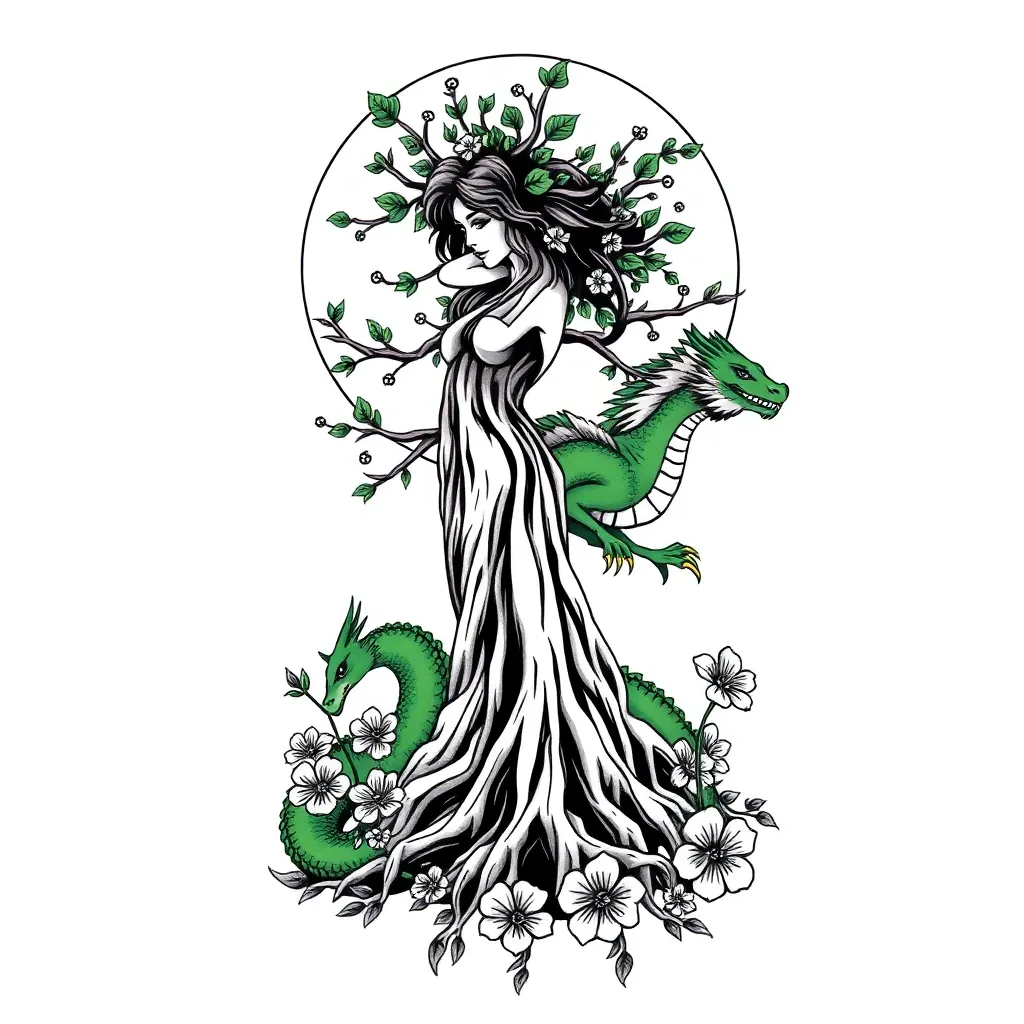
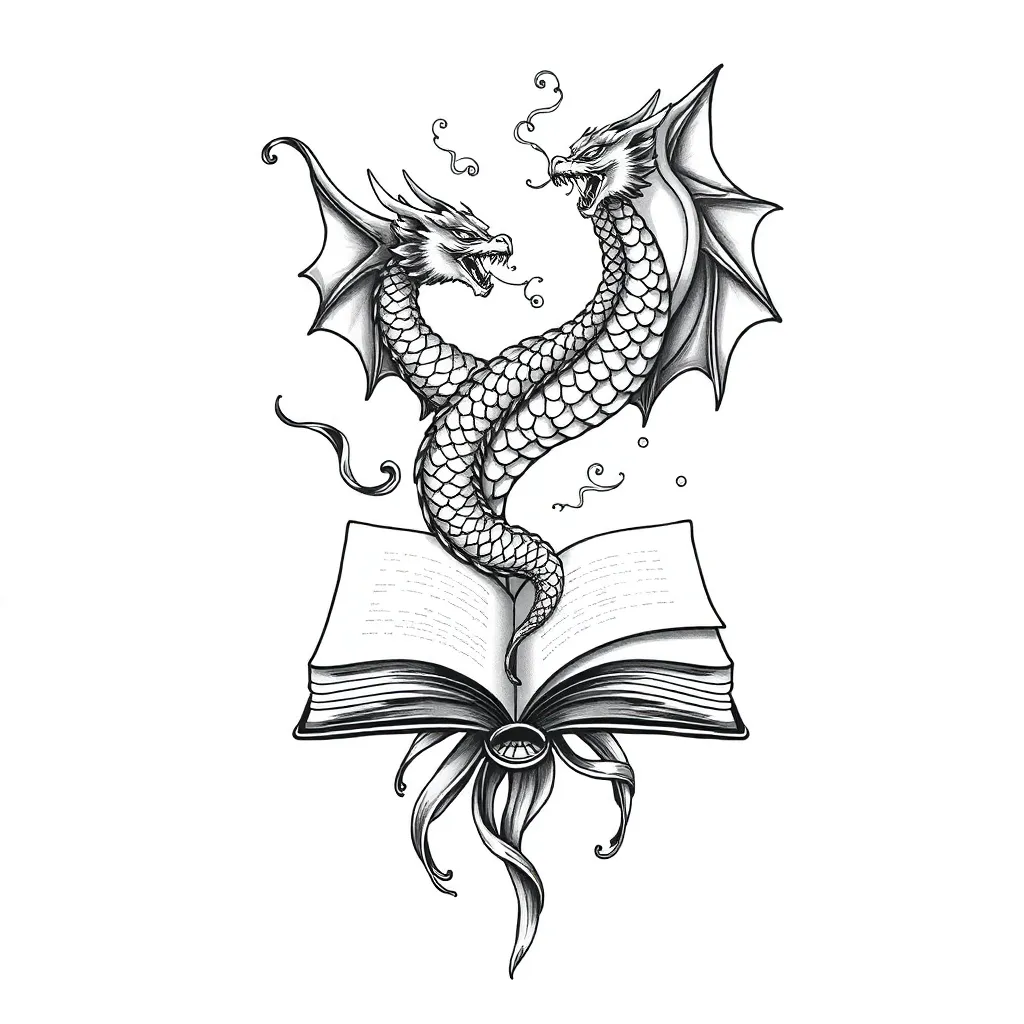
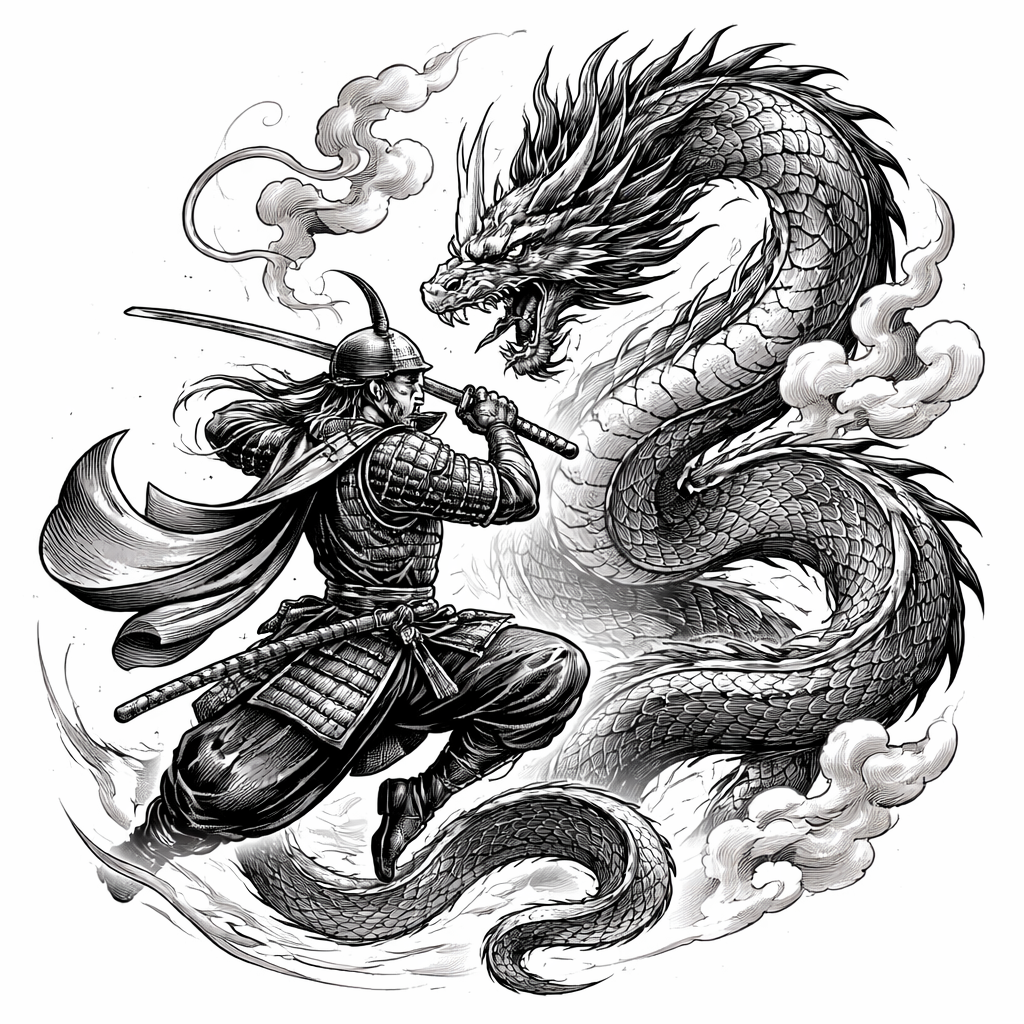
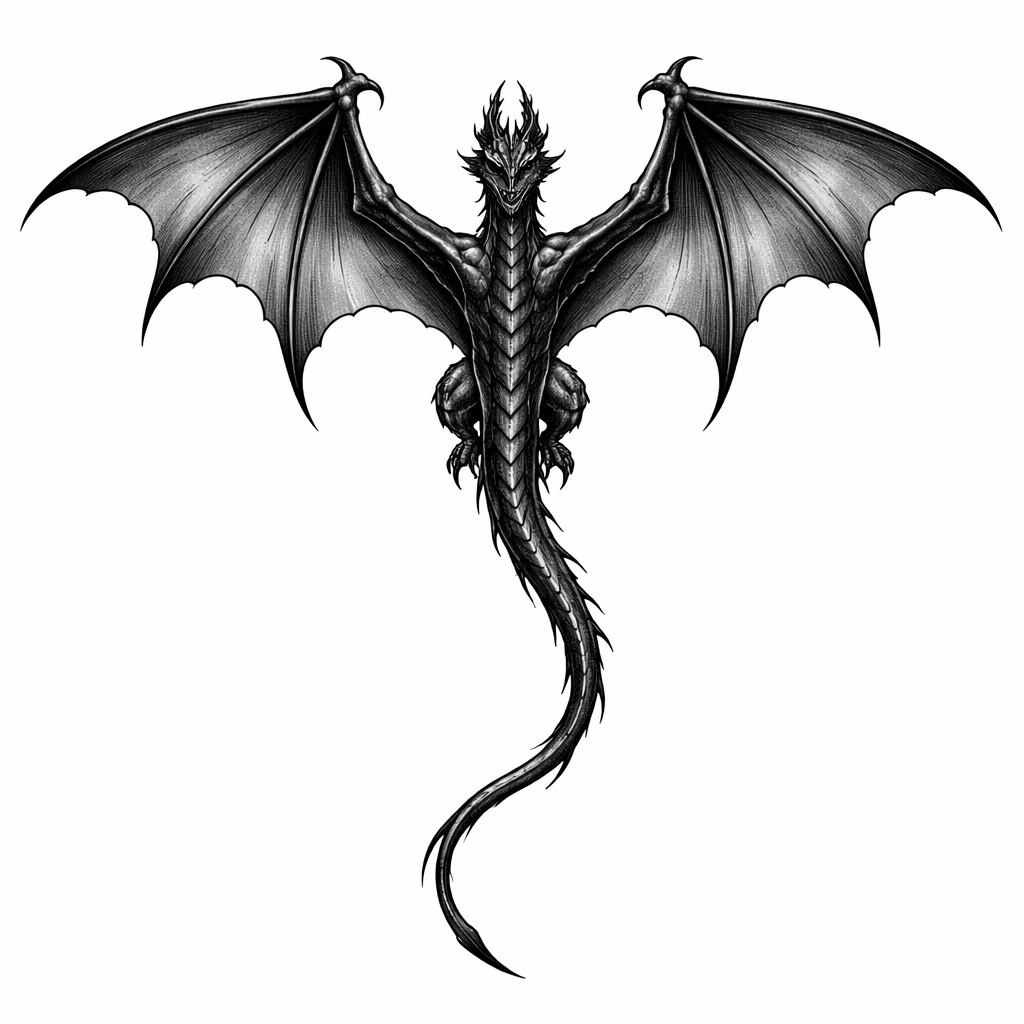
Illustrative pairs naturally with Dragon tattoos because the two have compatible visual priorities. Illustrative tattooing draws on centuries of drawn and printed imagery — woodcut, etching, pen-and-ink illustration and comic art — adapted into skin by artists with strong drawing backgrounds. Robert Borbas is among the artists associated with its etched, sketch-like end. It is not a folk tradition with fixed motifs but a translation of illustration craft, which is why it is one of the most personal, portfolio-driven styles to commission. A Dragon tattoo draws on two great visual traditions that have nothing to do with modern franchise media. The Japanese ryū is a long, serpentine creature, usually four-clawed, wingless, and rendered coiling through clouds, waves, or both. In irezumi, the dragon is associated with water, wisdom, and protection, and it is one of the foundational subjects for full-body work — often paired with peonies, koi, or tigers in vast back pieces composed over many sessions. The European heraldic dragon is its visual opposite: stocky, winged, often fire-breathing, drawn on coats-of-arms and shields as a symbol of strength, sovereignty, and guardianship. Both traditions predate any modern media use of dragons by centuries. When you commission a Dragon tattoo, you are stepping into a lineage of either Asian woodblock and ink-painting or European heraldry — both rich enough that you never need to borrow from contemporary franchises. The best dragon tattoos are built from the historical vocabulary: scales, whiskers, claws, and flowing tail in the Japanese mode, or wings, talons, and rampant pose in the heraldic mode. Put together, a Illustrative Dragon tattoo gives you the visual language of one and the emotional intent of the other — a design that reads at a glance and still carries meaning up close.
About Illustrative tattoos
Illustrative tattooing draws on centuries of drawn and printed imagery — woodcut, etching, pen-and-ink illustration and comic art — adapted into skin by artists with strong drawing backgrounds. Robert Borbas is among the artists associated with its etched, sketch-like end. It is not a folk tradition with fixed motifs but a translation of illustration craft, which is why it is one of the most personal, portfolio-driven styles to commission.
About Dragon tattoos
A Dragon tattoo draws on two great visual traditions that have nothing to do with modern franchise media. The Japanese ryū is a long, serpentine creature, usually four-clawed, wingless, and rendered coiling through clouds, waves, or both. In irezumi, the dragon is associated with water, wisdom, and protection, and it is one of the foundational subjects for full-body work — often paired with peonies, koi, or tigers in vast back pieces composed over many sessions. The European heraldic dragon is its visual opposite: stocky, winged, often fire-breathing, drawn on coats-of-arms and shields as a symbol of strength, sovereignty, and guardianship. Both traditions predate any modern media use of dragons by centuries. When you commission a Dragon tattoo, you are stepping into a lineage of either Asian woodblock and ink-painting or European heraldry — both rich enough that you never need to borrow from contemporary franchises. The best dragon tattoos are built from the historical vocabulary: scales, whiskers, claws, and flowing tail in the Japanese mode, or wings, talons, and rampant pose in the heraldic mode.
AI prompt ideas for Dragon Illustrative tattoos
- “Illustrative: Japanese-style ryū coiling through clouds along the full sleeve, four-clawed and wingless, classic irezumi palette”
- “Illustrative: Heraldic European dragon rampant on a shield, neo-traditional colour, upper-back placement”
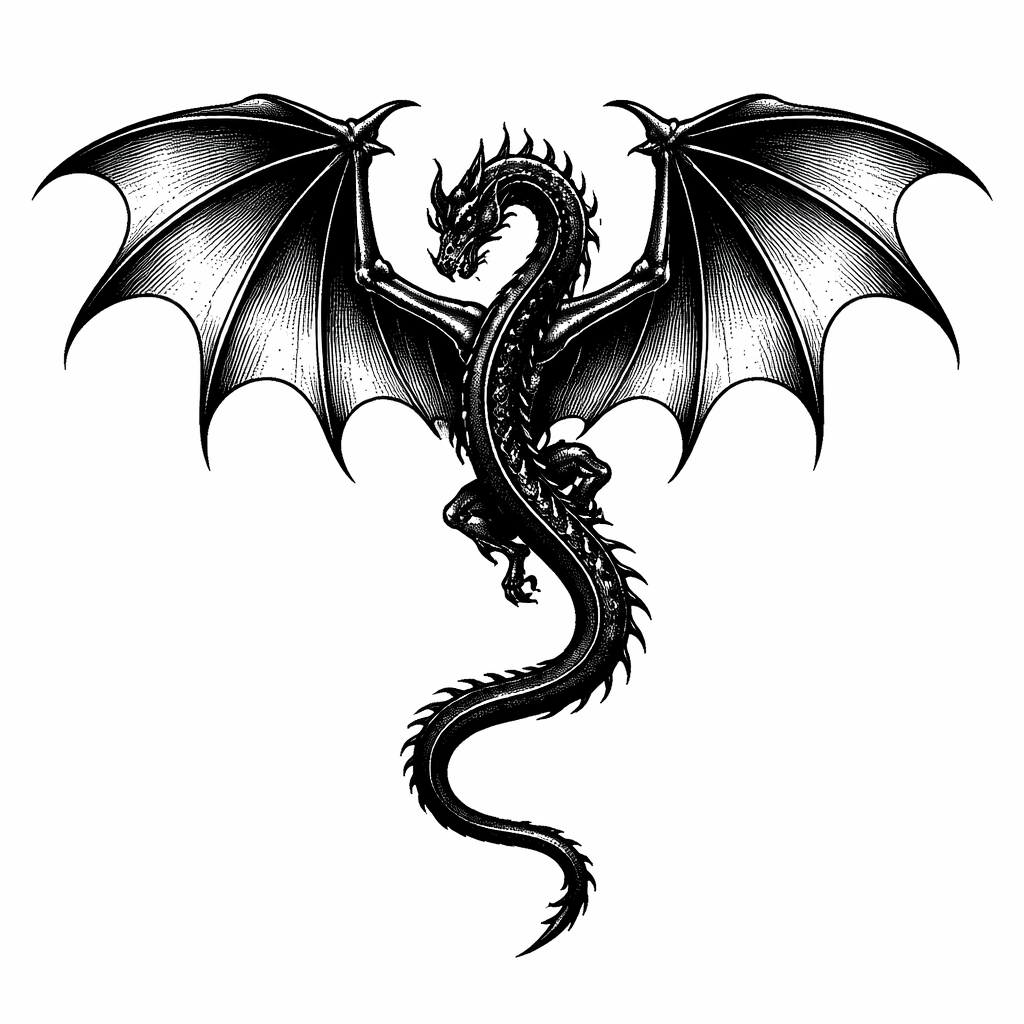
- “Illustrative: Blackwork silhouette of a winged dragon mid-flight with negative-space flame on the calf”
- “Illustrative: Illustrative hand-drawn dragon curled around a peony, fine line with dotwork shading”
- “Illustrative: Japanese-style dragon head emerging from crashing waves, black and grey only, chest panel”
Dragon Illustrative designs from the community
Related combos
Dragon Illustrative questions
- What is a Dragon tattoo?
- For a Illustrative Dragon tattoo specifically: A dragon tattoo depicts a mythological dragon, drawn from either the Japanese ryū tradition (long, serpentine, four-clawed, often with clouds or waves) or the European heraldic tradition (winged, fire-breathing, often on a shield).
- Who is a Dragon tattoo good for?
- People drawn to mythological strength, guardianship, and bold flowing imagery. Dragons suit anyone planning a substantial piece — they reward larger canvases and reward a wearer willing to commit to multiple sessions.
- What styles work best for a Dragon tattoo?
- Japanese style for the serpentine ryū, neo-traditional for richly coloured heraldic dragons, blackwork for high-contrast winged silhouettes, and illustrative for personalised hand-drawn dragons that mix traditions thoughtfully.
- What size and placement work best?
- Dragons are creatures of length — they want a back, a full sleeve, a thigh, or a chest-to-ribs flow. Small dragon tattoos can work but lose the dynamism that makes the subject worth choosing in the first place.
- Any aftercare specific to a Dragon tattoo?
- Large dragon pieces are usually multi-session work, so each panel heals separately — follow your artist's aftercare for each. Solid black scale fills and saturated colour need careful moisturising and complete sun avoidance during healing to settle evenly.
- Is a Dragon tattoo a good first tattoo?
- Honestly, not usually. Dragons reward scale and commitment, and a tiny first-tattoo dragon often underwhelms. If you love the subject, consider getting a smaller unrelated piece first and saving the dragon for when you are ready for a multi-session larger work.