Tattoo Style
Biomechanical Tattoos
A practical guide to Biomechanical tattoos: where the style comes from, what makes it recognisable, prompt ideas, real community examples, and answers to the questions people ask before they commit.
Generating this style needs the Alchemist plan or above — but reading and planning here is always free.
Biomechanical tattoos at a glance
- Colour
- Black & grey
- Line weight
- Fine
- Skill level
- Advanced
- Best placement
- Large, flowing areas
The history of Biomechanical tattoos
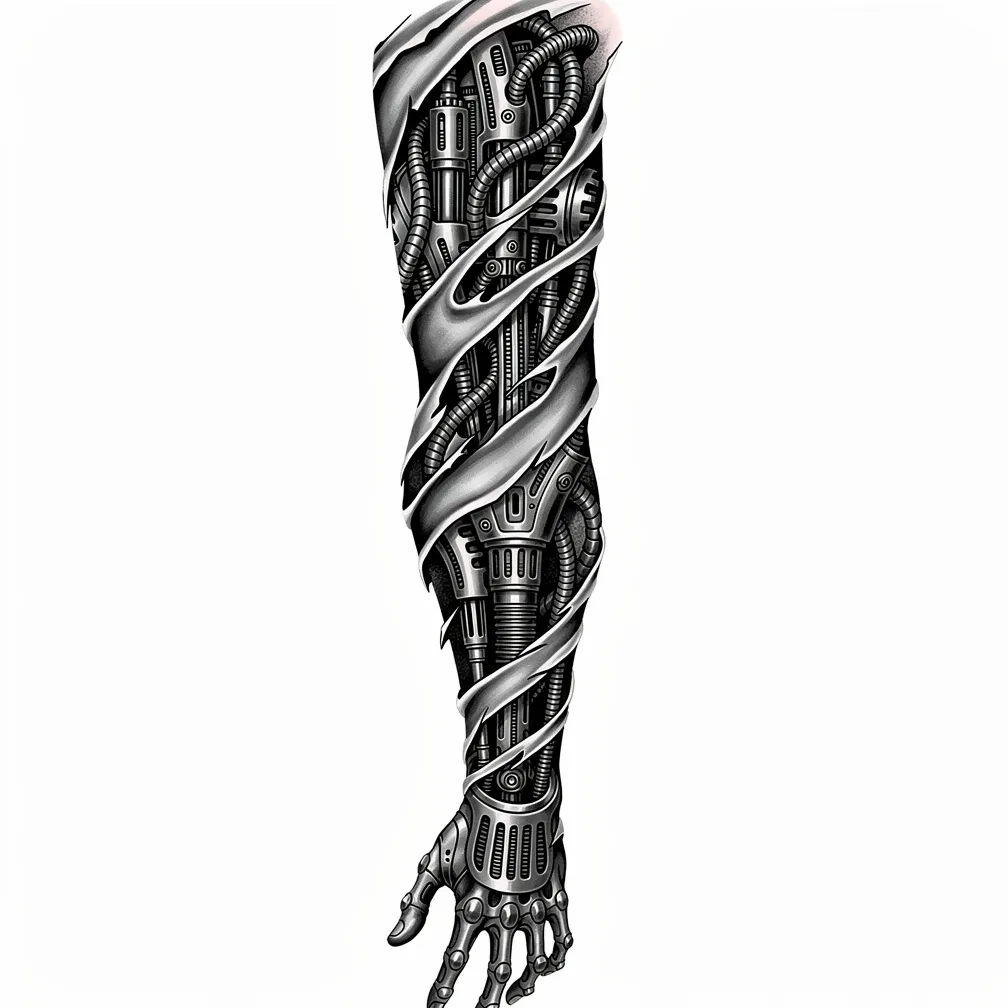
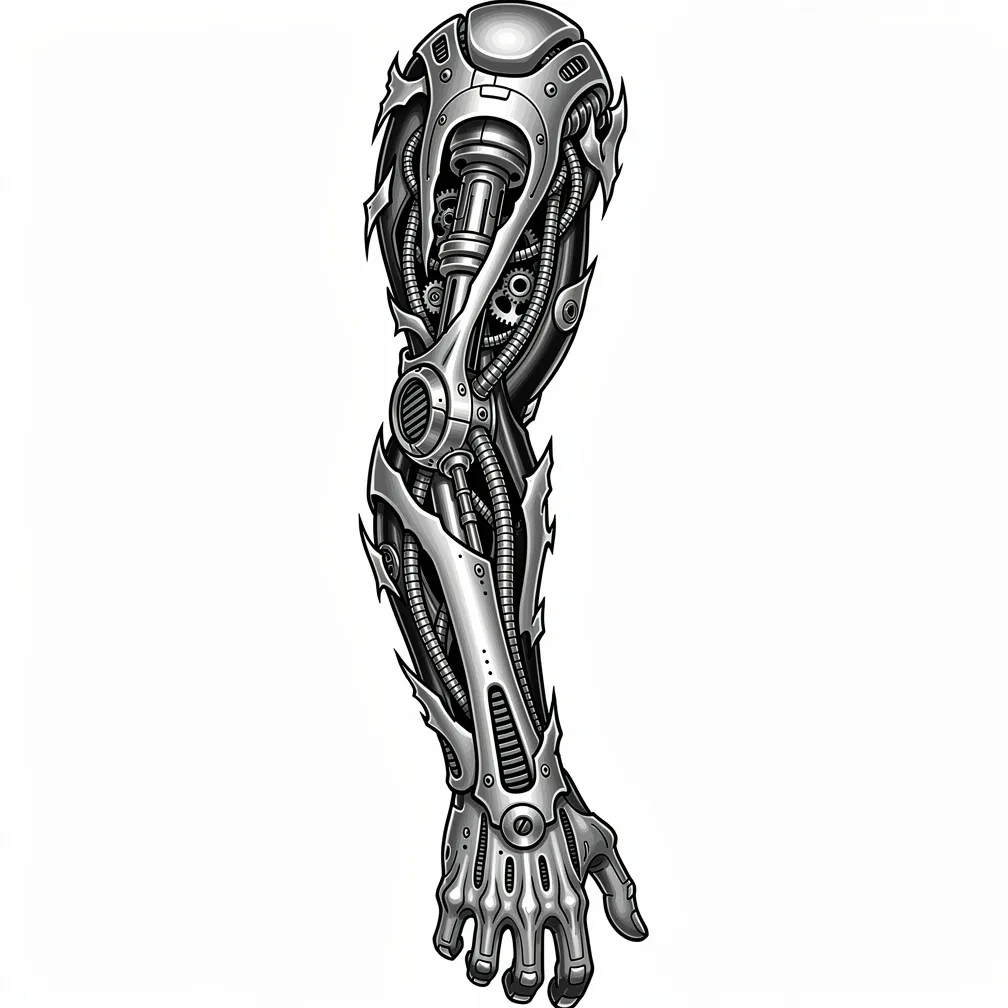
Biomechanical tattooing depicts the body as if machinery, pistons, cables and organic-metal structures lie beneath the skin, appearing to tear or open to reveal the engine inside. It is heavily three-dimensional, usually black-and-grey, and at its best it is custom-fitted to the wearer's anatomy so the mechanism seems to follow the real muscles and joints. It is one of the most technically ambitious styles in tattooing. The style fuses surreal fine-art influence with realism technique, demanding strong understanding of light, depth and form to make metal and sinew feel genuinely embedded. Because the illusion depends on flowing with anatomy, biomechanical work is typically planned around a specific limb rather than as a transferable flash design. Its honest demand is scale and expertise: small biomechanical pieces rarely sell the illusion, and the style rewards specialist artists working at sleeve or panel size.
Where Biomechanical comes from
Biomechanical imagery is strongly associated with the surreal industrial art of H.R. Giger and the broader science-fiction aesthetic of fusing organism and machine. Tattoo artists adapted it from the 1980s onward as black-and-grey realism technique matured. It is a fine-art-and-cinema-influenced contemporary style, defined by an idea — the body as biological machine — rather than by a fixed catalogue of motifs.
AI prompt ideas for Biomechanical tattoos
- “A biomechanical forearm with pistons and cables beneath torn skin, black-and-grey, 3D depth”
- “A biomechanical shoulder where metal vertebrae and tubing follow the muscle, realistic shading”
- “An organic-metal biomechanical hand revealing gears under the skin, high detail”
- “A surreal biomechanical chest piece blending bone and machinery, dramatic lighting”
Biomechanical designs from the community
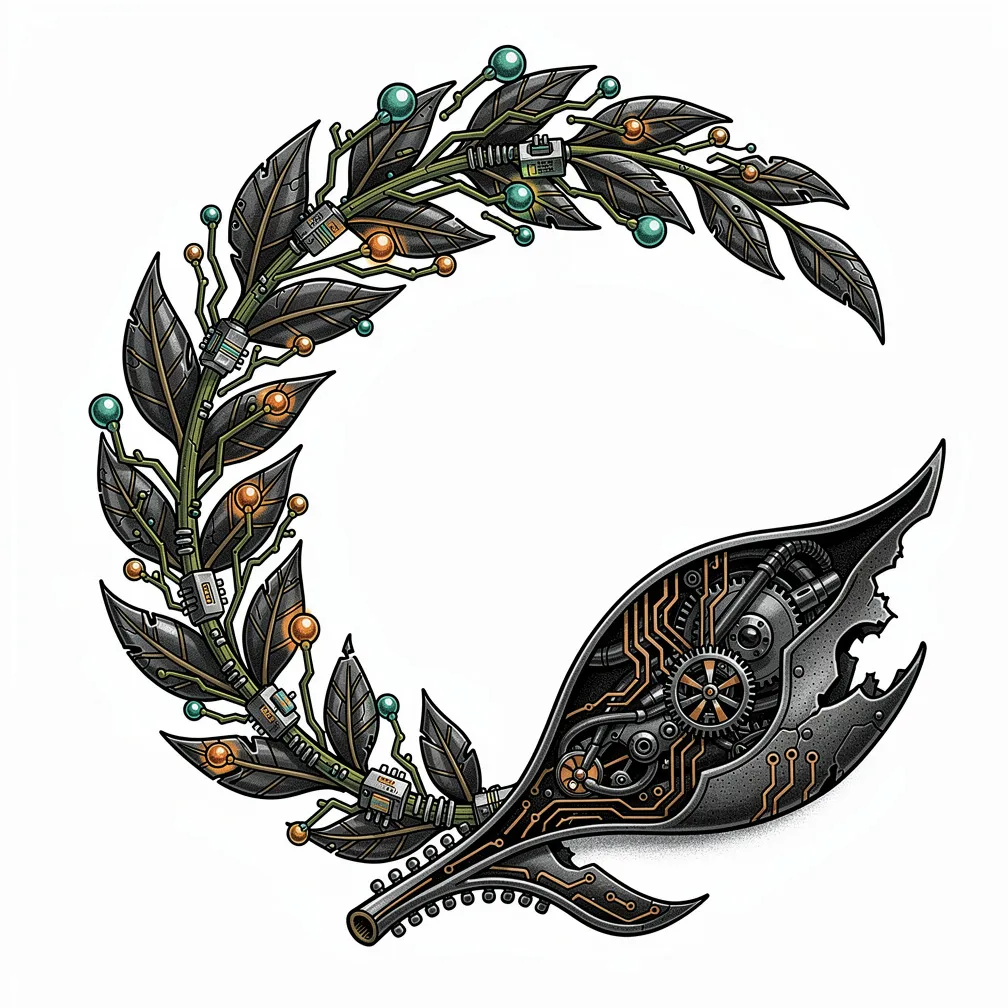
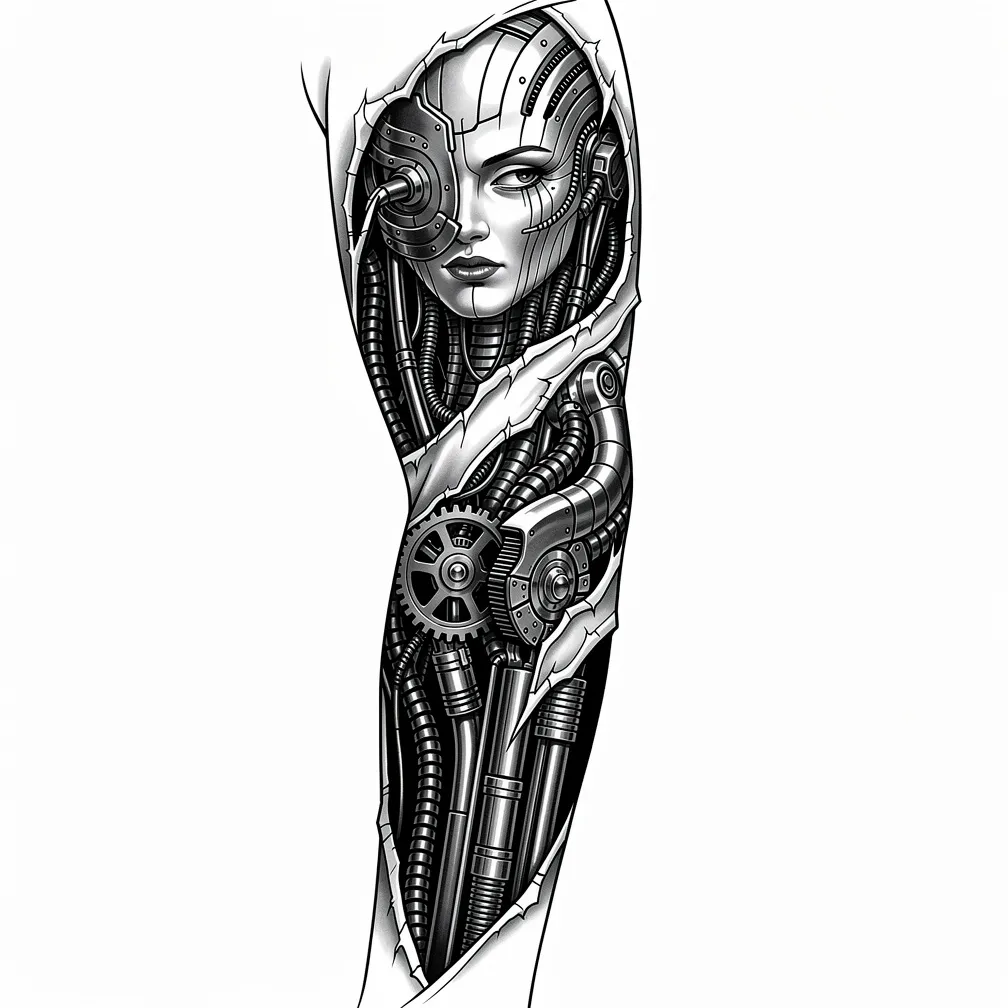
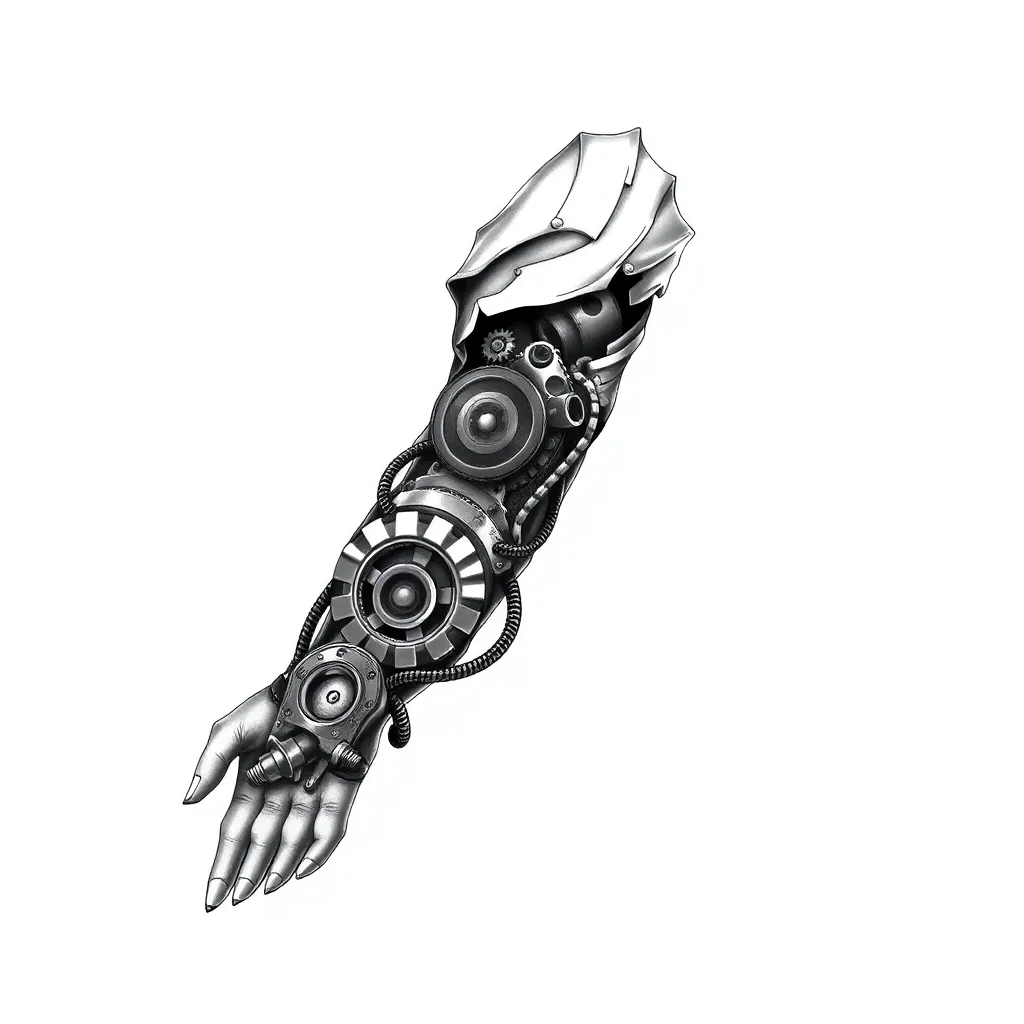
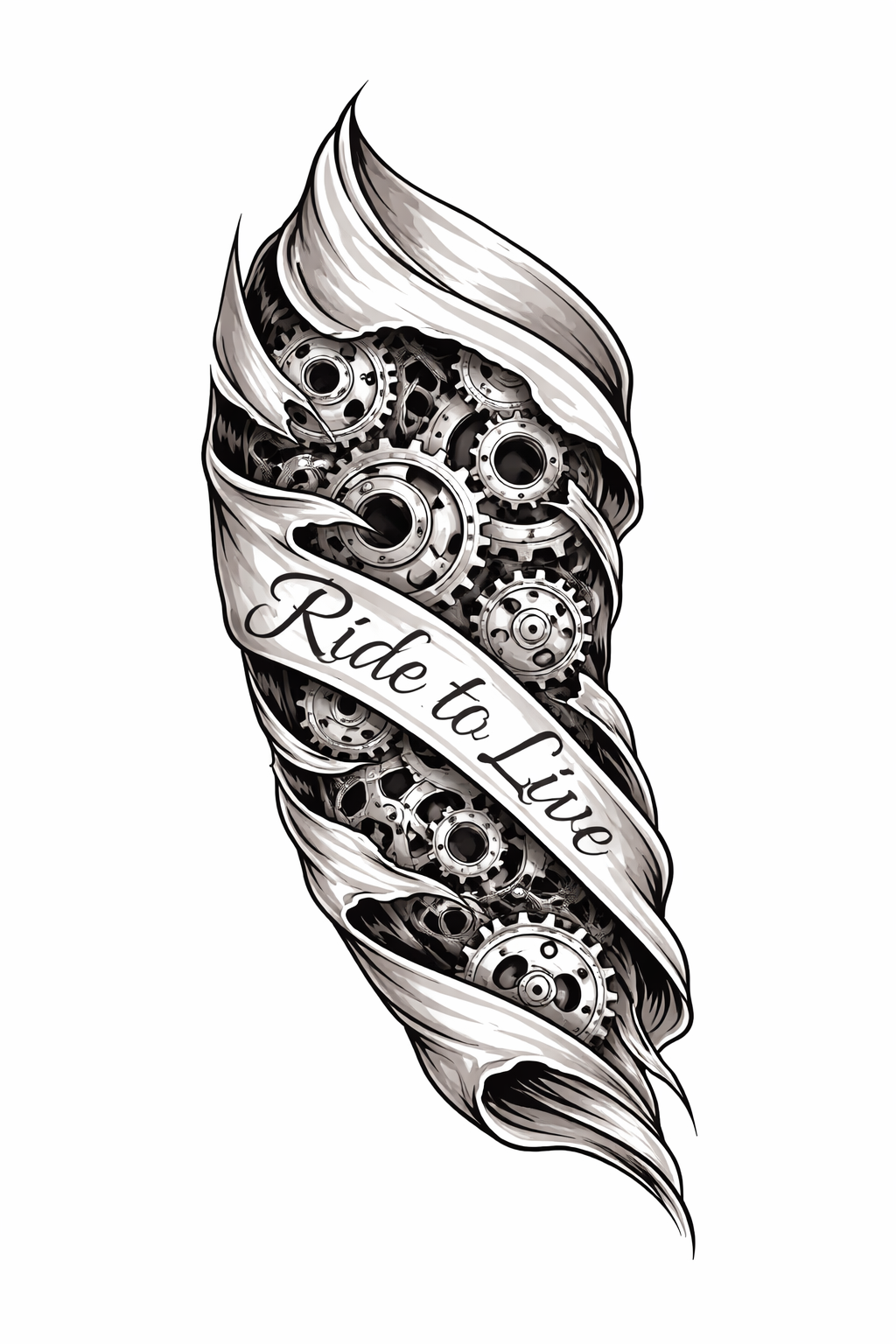
Related tattoo styles
Biomechanical tattoo FAQ
- What makes a Biomechanical tattoo recognisable?
- A three-dimensional illusion of machinery and organic-metal structure beneath torn skin, usually black-and-grey and fitted to the wearer's anatomy.
- Why does Biomechanical need to be large?
- The illusion depends on the mechanism flowing with real muscle and joint movement, which needs space. Small pieces rarely sell the embedded-machine effect.
- What are the best body placements for Biomechanical tattoos?
- Limbs and torso panels — full sleeves, calves, chest — where the design can be mapped to anatomy so the mechanism appears to move with you.
- Are Biomechanical tattoos demanding to sit for?
- Generally yes. Large black-and-grey realism with heavy shading means long, repeated sessions, so it is one of the more intensive styles to complete.
- Is Biomechanical good for a first tattoo?
- It is usually a step-up project rather than a first piece, because it works best large and depends heavily on an experienced realism specialist.
- What should I write to generate a Biomechanical tattoo?
- Describe the body area and add biomechanical, machinery beneath torn skin, black-and-grey with strong 3D depth and anatomical flow.